Zeratron
Uncrewed aircraft detection
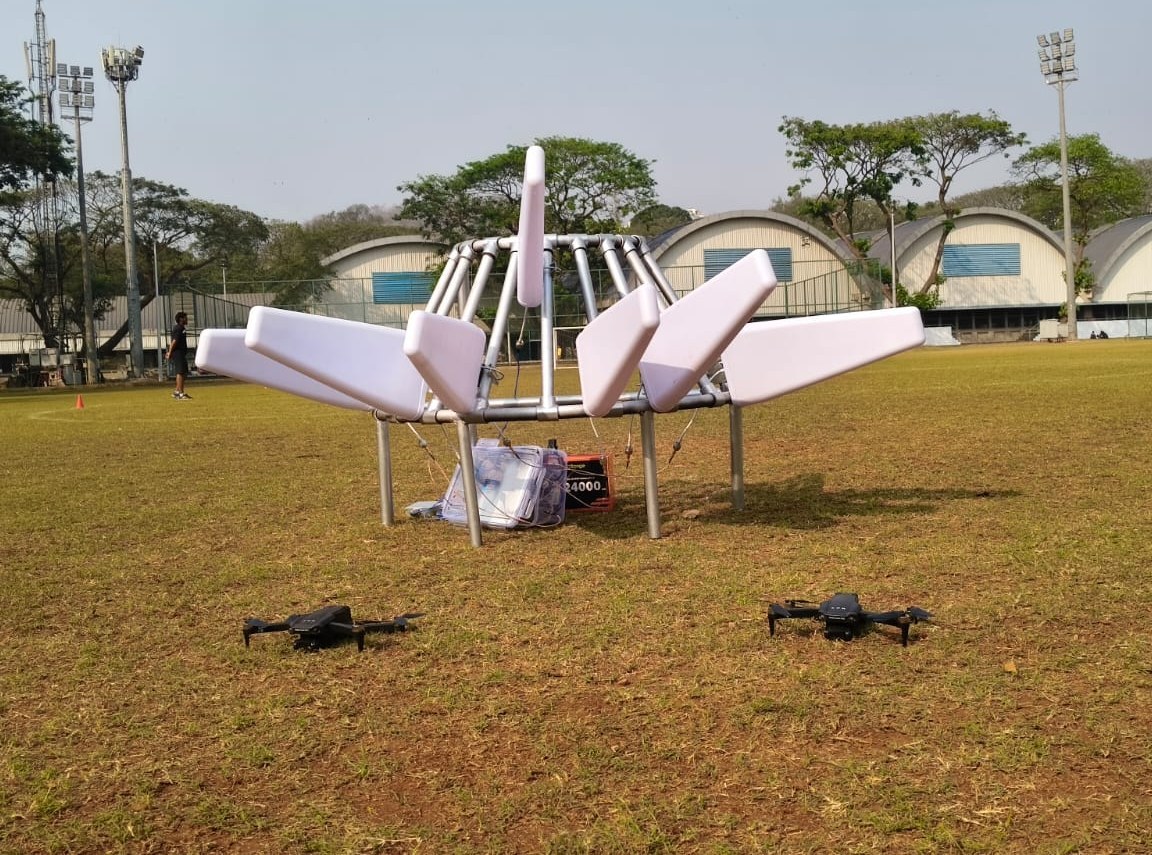
A man-portable receiver that detects, classifies and bears uncrewed aircraft through the control and video links they depend on. No transmitter, no vehicle, no dependence on connectivity.
Applications / One sensing chain, several problems
Passive RF sensing and signal processing answer a simple question in a lot of different settings: what is transmitting, where is it, and what does that mean for the person or system that needs to act on it. The chain stays the same. The application changes.
01 / Signal chain
Continuously observe the RF environment, wideband and without transmitting.
Separate the patterns that matter from the ordinary activity around them.
Resolve direction, and where possible position, from the received signal.
Deliver a timely, decision-ready cue to the operator or the system downstream.
02 / Where we apply it
A man-portable receiver that detects, classifies and bears uncrewed aircraft through the control and video links they depend on. No transmitter, no vehicle, no dependence on connectivity.
Standing situational awareness of a band: what is occupying it, when, and how that changes over time. Useful wherever an operator needs to know what is on the air before deciding anything else.
Turning raw RF observations into structured, decision-ready information: identification, direction finding and pattern recognition across a live, crowded environment.
Electronically steered surfaces that shape how a system transmits and receives, built on the same fundamentals as our sensing work. More on the spectrum page.
03 / Field work
Performance figures will follow completed trials. For now, the focus is the receiver, the power budget, and the conditions operators actually face.